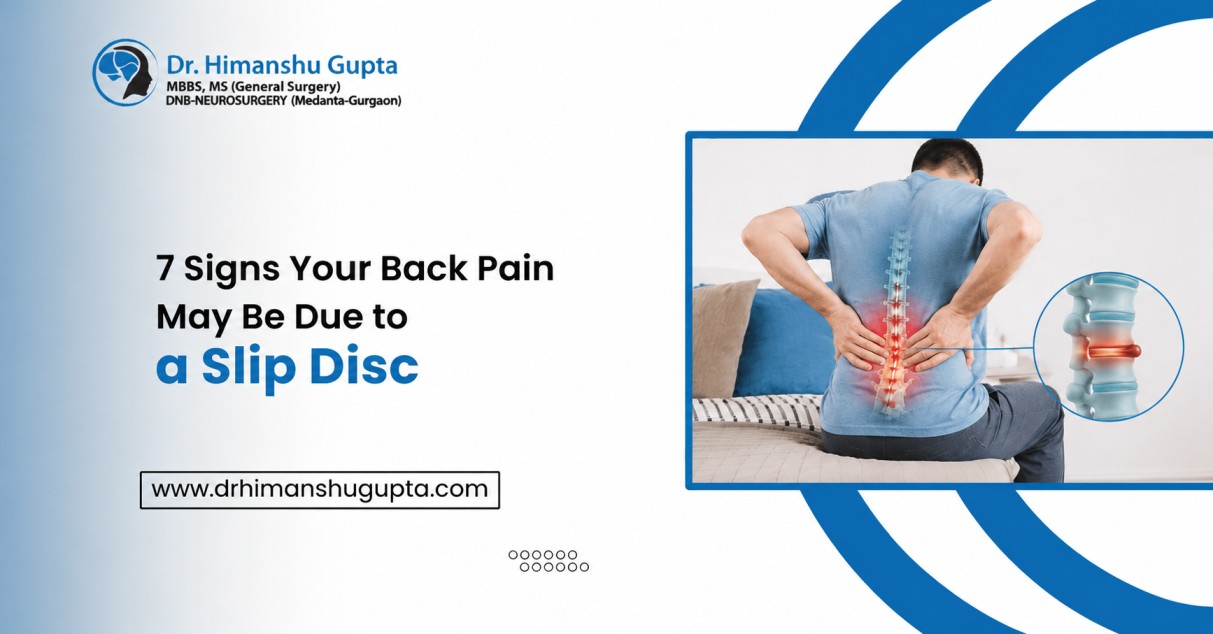
7 Signs Your Back Pain May Be Due To A Slip Disc
Most of us brush off back pain, thinking it's because of long office hours, lifting something heavy, or simply getting older. But sometimes, your spine is asking for attention. Knowing the early slip disc symptoms can help you seek treatment at the right time and avoid bigger problems later.
What is a Slip Disc?
There are soft cushions between each bone in your spine. These cushions help absorb pressure and let your spine move smoothly. If one of these cushions slips or is destroyed, it can press on a nearby nerve. It can cause soreness, tingling, numbness, or weakness, most commonly in the lower back.
What are the Slip Disc Symptoms?
1. Pain That Travels Down One Leg
One day your back hurts. The next day the discomfort starts to travel down your hip, buttock, or leg. This isn't the ordinary backache individuals experience after a hard day. This can be an early Sign of a Slip Disc. Some people describe it as a stabbing pain; others have a burning sensation that comes and goes. It can be made worse by standing long distances or sitting too long.
2. Tingling or Numbness That Doesn't Feel Normal
Tingling or numbness in your leg or foot may seem like a minor condition at first, but it’s not anything to overlook. This Slip Disc Pain Symptoms are generally caused by a slipped disc pressing on a neighboring nerve. If you keep getting it back and it’s accompanied by back discomfort, it’s time to see a doctor.
3. Your Leg Suddenly Feels Weak
If climbing stairs has become harder or your leg feels unusually weak, don't blame it only on tiredness. A slipped disc can affect the nerves that control your muscles. You may notice your foot dragging slightly or feel less confident while walking. Small changes like these often develop gradually, so people overlook them until everyday activities become difficult.
4. Sitting for Long Makes the Pain Worse
Many people notice the pain becomes stronger after sitting through a meeting, a long drive, or even while watching a movie. Bending forward to tie your shoes or pick something up can also trigger discomfort. This is why Back Pain and Slip Disc are often connected. If changing your position gives only temporary relief, it's worth getting your spine checked instead of simply hoping the pain will disappear.
5. Your Back Pain Just Doesn't Go Away
A little back pain after lifting something heavy is common. But if the pain keeps coming back or stays for weeks, don't ignore it. Among the many Lower Back Pain Causes, a slipped disc is one that needs proper treatment. Waiting too long may only make daily life more uncomfortable.
6. Even a Cough or Sneeze Hurts
Many people first notice something is wrong when a simple cough, sneeze, or laugh sends a sharp pain through their back. If this keeps happening, it could be one of the Slip Disc Symptoms. Small changes like these are easy to ignore, but they shouldn't be.
7. Trouble Controlling Your Bladder or Bowels
This is uncommon, but it's the biggest warning sign. If severe back pain comes with difficulty controlling your bladder or bowels, don't wait or try home remedies. Visit a hospital immediately. Quick treatment can help protect your nerves and prevent long-term problems.
About Dr Himanshu Gupta
Dr Himanshu Gupta is an experienced neurosurgery specialist in Jaipur with expertise in treating slipped discs, spine disorders, and nerve-related conditions. He believes in finding the exact cause of pain before planning treatment. His patient-friendly approach and modern treatment methods help people return to their normal routine with confidence.
Conclusion
Sometimes back pain is not from sitting too long or picking up something heavy. Sometimes your body is trying to tell you something isn't right. If you see Slip Disc Symptoms, don’t wait for the pain to quiet down on its own or ignore them. Getting checked out early can make therapy easier and help get you back to your daily routine sooner.
FAQs
1. What are the common Slip Disc Symptoms?
Common sign of slip disc are back pain, discomfort in the leg, numbness, tingling, and weakness of muscles.
2. Can back pain and slip disc get better without surgery
Yes, many cases get better with medicine, physiotherapy, and changes to lifestyle.
3. What’s the most prevalent cause of lower back pain?
Main causes are muscular strain, bad posture, arthritis, and slipped disc.
4. When are Slip Disc Pain Symptoms considered serious?
If the pain is severe or causes weakness, numbness, or bladder difficulties, then low back pain treatment in Jaipur can be considered.
5. When is Slip Disc Surgery in Jaipur needed?
Slip disc surgery is recommended when severe pain, numbness, or weakness does not improve with medications and physiotherapy. It may also be needed if the slipped disc is pressing on the nerves and affecting movement or daily activities



_1634735781.webp)
_1634735795.webp)